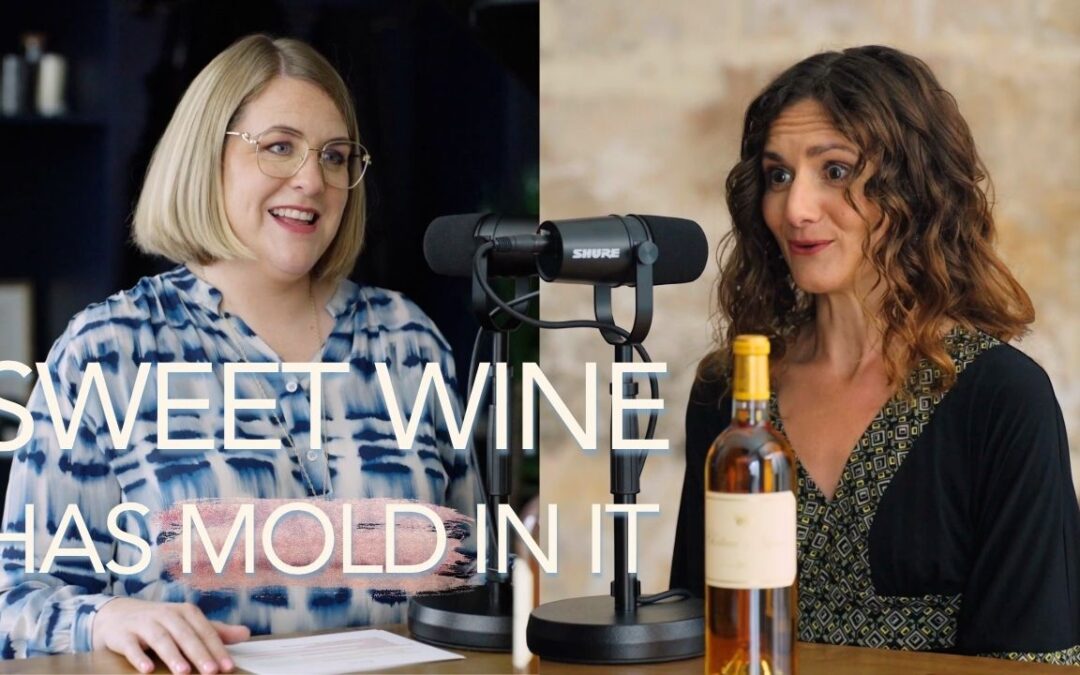
Did you know some of the world’s most sought-after wines are made with mold?
In this episode of Fishwives of Paris, Emily Monaco and Caroline Fazeli explore the fascinating world of Botrytis cinerea, the fungus known as “noble rot.” While this mold can devastate vineyards when conditions are wrong, under the right circumstances it transforms grapes into some of the world’s most celebrated sweet wines.
Join us as we uncover the science behind noble rot, the centuries-old legends surrounding its discovery, and the unique conditions required to produce wines like Sauternes, Tokaji, and noble rot Rieslings. Along the way, we’ll discuss the challenges of harvesting these wines, the flavors that make them so distinctive, and why bottles from producers like Château d’Yquem command such extraordinary prices.
From Bordeaux to Hungary, from fungal genetics to food pairings, this episode reveals how one of nature’s most destructive forces became one of winemaking’s greatest gifts.
Wines Discussed
Sauternes (Bordeaux, France)
The most famous French wine made with noble rot. Produced in Bordeaux’s Sauternes region, where morning fog and afternoon sunshine create ideal conditions for Botrytis cinerea.
Château d’Yquem
Widely regarded as the most prestigious producer of Sauternes and one of the greatest sweet wines in the world. The hosts examine a bottle of 2013 Château d’Yquem during the episode.
Tokaji Aszú (Hungary)
One of the world’s oldest and most celebrated sweet wines. The episode explores the legend that noble rot winemaking originated in Hungary during the 17th century after a delayed harvest caused by the Ottoman-Turkish wars.
Noble Rot Riesling (Germany)
Certain German Rieslings benefit from noble rot, producing intensely aromatic sweet wines with remarkable balance between sweetness and acidity.
Chenin Blanc Dessert Wines (Loire Valley, France)
Chenin Blanc is highlighted as one of the grape varieties particularly well suited to noble rot production.
Ice Wine (Eiswein)
Discussed as an alternative method of producing sweet wine, using grapes that freeze naturally on the vine before harvest.
Vin de Paille
A traditional sweet wine made from grapes dried on straw mats before pressing, another technique used to concentrate sugars without noble rot.
Grape Varieties Discussed
- Sémillon (the principal grape of Sauternes)
- Chenin Blanc
- Riesling
Food Pairings Mentioned
- Roquefort and other blue cheeses
- Foie gras
- Fruit-based desserts, particularly peach and apple desserts
Key Topics Covered
- What is Botrytis cinerea?
- Noble rot vs. gray rot
- The Hungarian origins of noble rot winemaking
- The history of Sauternes
- How Botrytis changes grape chemistry
- Why noble rot wines are so expensive
- Château d’Yquem and luxury wine
- The science of fungal genetics
- Climate change and the future of noble rot wines
Follow Fishwives of Paris for more stories about French food, wine, culture, and culinary history.