
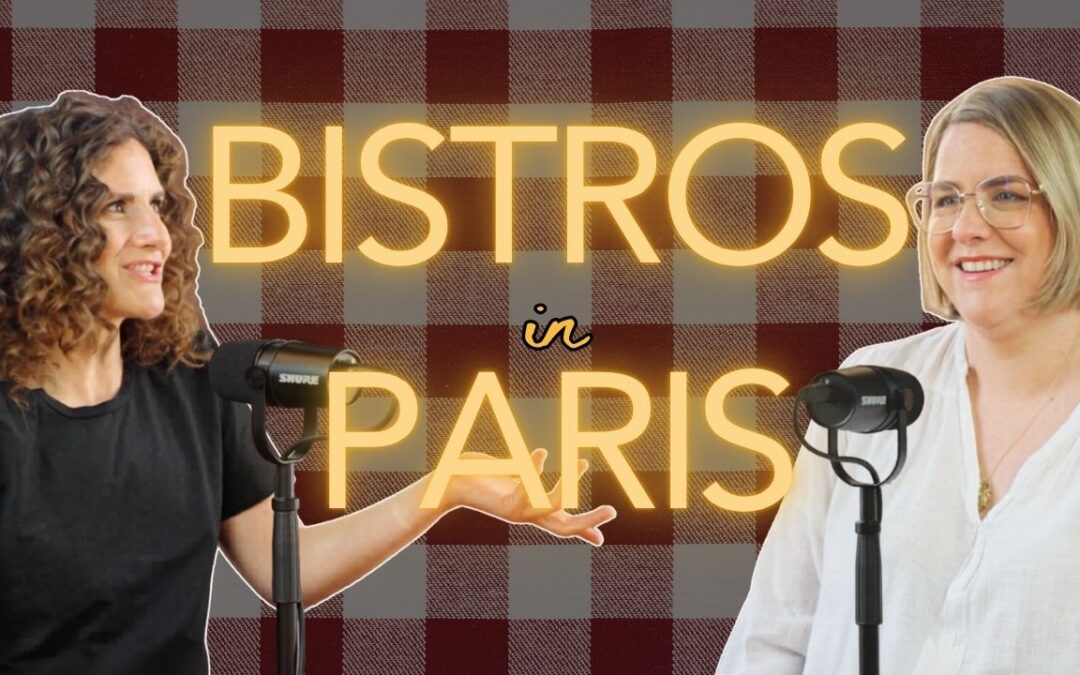
Episode 16 What Even Is A Bistro
Bistros in Paris
This episode dives into the real story behind the Parisian bistro, one of the most misunderstood concepts in French dining. While many believe bistros were created by Russian soldiers shouting “bystro,” the truth lies in 19th-century migration from the Auvergne, where working-class communities built spaces centered around wine, conversation, and everyday life.
Along the way, we break down the differences between bistros, brasseries, bouillons, cafés, and restaurants, and how these once-clear categories have blurred over time. We also explore how the rise of “bistronomy” and modern dining trends have transformed the meaning of the bistro today.
If you’ve ever wondered what a bistro actually is, or why Paris has so many types of restaurants, this episode is your guide to understanding it all.
Episodes drop every other Tuesday on YouTube, Spotify, Apple Podcasts, Deezer, and everywhere you get podcasts.
MORE FISHWIVES OF PARIS CONTENT
Can’t get enough hot takes on French bacon and Baguette history? Try watching our episode on Mexican Food in France, Beef Bourguignon, or The Great (Fake) Potato Heist.
SHOWNOTES
Bistros in Paris
What actually is a bistro, and why does Paris seem to have a different word for every type of restaurant?
In this episode of Fishwives of Paris, Emily Monaco and Caroline Fazeli break down one of the most misunderstood concepts in French food culture. From cafés to brasseries to bouillons, the lines between these establishments used to be clear, but today, they are anything but. Along the way, they debunk the persistent myth that bistros were invented by Russian soldiers yelling “bystro,” and instead trace their real origins to waves of migration from the Auvergne into Paris.
The result is a story that has less to do with tablecloths and steak frites, and more to do with community, labor, and the evolution of French comfort food. Follow us on socials for more content on our top bistro picks in Paris.
What You’ll Learn
- What a bistro actually is, and why most people use the word incorrectly
- The difference between a bistro, café, brasserie, bouillon, and restaurant
- Why the Russian “bystro” origin story is a myth
- How migration from the Auvergne shaped Parisian food culture
- What “bistronomy” is, and how it changed the modern bistro
- Why many “bistros” today are no longer cheap or working-class
- What to look for when choosing a true bistro in Paris
French Dining, Explained
Bistro
- Small, casual, cozy
- Historically no reservations
- Focus on community and quick service
- Now often a mix of tradition and reinterpretation
Brasserie
- Originally Alsatian, beer-focused
- Open all day (continuous service)
- Larger, often more formal setting
- Can range from beautiful to very average
Bouillon
- 19th-century working-class establishments
- Early “chain restaurants” in Paris
- Cheap, fast, efficient meals
- Often with shared tables and paper tablecloths
Café
- Primarily for drinks (coffee, wine)
- Social and cultural institutions
- Historically key “third spaces” in Paris
Restaurant
- More formal dining
- Fixed service times (lunch and dinner)
- Higher-end than the categories above
How to Spot a Bistro (Visual + Cultural Clues)
While not definitive, classic signs include:
- red and white checkered tablecloths
- chalkboard menus with daily specials
- small wine glasses
- zinc or wooden bar
- tiled floors
- close, convivial seating
But remember: today, these are aesthetic signals, not guarantees